Mothman has cultural influence as a omen of disaster. Sources on the Internet have used the Mothman framing of sighting a weird thing before a tragedy to spread stories about events worldwide including a manufactured story about a black bird seen before the Chernobyl meltdown.
Flying harbinger of doom
Mothman is one of the world’s most popular “cryptids”. The weird bird-man thing with red eyes is known across the globe because of the media content created about it. Mothman, the legend, was born in Point Pleasant, West Virginia in late 1966 when several people saw what the Point Pleasant Register called a “man-sized bird, creature, something”. To be clear, it was known as “The Bird” at first, with the name “Mothman” bestowed to sensationalize an already strange story. The name bore little to no relationship to the initial sightings. However, as also happens with creative visual interpretations, the name influenced what people envisioned the creature to be.
Even more influential was the promotion by Fortean writer John Keel who chronicled (his version of) the story from Point Pleasant depicting Mothman as a supernatural creature and omen associated with highly strange events. Keel’s book, The Mothman Prophecies, was the vehicle that propelled the Mothman to infamy. We must also cite Gray Barker [1], though, who, along with Keel, developed Mothman into a signifier for “high strangeness” and linked the creature to the collapse of the Silver Bridge across the Ohio River in 1967 that killed 46 people. Mothman, the entity, perhaps helped to fill in the vacuum of meaning felt by the residents as they struggled to move past the disaster.
As a Fortean subject and as a debatable cryptid, Mothman deserves its own detailed biography because it is so weird and complex, and connects to so many related subject areas of folklore, sociology, psychology, and the unexplained. It doesn’t have one because its a sprawling, complex subject that cannot sustain one through-line. No author has since successfully tackled it. Something about the story, the idea, and the affected town, lingered for decades. Then it exploded in popularity propelled by a 2002 movie inspired by Keel’s book. Mothman appeared in video games, got its own museum, a dedicated statue, and a renowned town festival. It became the quintessential pop cryptid and the monstrous patron of Point Pleasant. [2]

Unsurprisingly, people started seeing it in new places. In a call-back to Keel’s framing, Mothman was seen as the messenger of doom. [3] Contemporary legends retroactively recounted it in Texas (Galveston hurricane), Mexico (Mexico City earthquake), Chernobyl (nuclear meltdown), and NYC (Ground Zero on 9-11) among other locations of disasters. What people actually saw, if anything, in those incidents is dubious and doubtful because it’s the age of the Internet where anyone can say anything and someone will share it as true. The line between facts and fiction have been almost entirely obscured beyond recognition. It is the Chernobyl incident that I would like to document here. I have seen the reference repeated by copy-pasting web creators and sloppy YouTubers, and in citations by paranormal writers and authors who should know better. The truth is, the Black Bird of Chernobyl as linked to Mothman was entirely made up.
The Black Bird
The Black Bird of Chernobyl story goes as follows: In April 1986, workers at the nuclear facility and residents in Pripyat, Ukraine, near the plant, saw a large, dark, sometimes headless, flying creature with red eyes. The sightings seemingly peaked before the April 26 explosion. The tale fits the portentous tone of the original Mothman story, leading up to a shocking tragedy.
But there is no evidence supporting this tale.
The link between a mysterious flying creature and events at Chernobyl do appears in two places, but much later than 1986.
The 2002 movie reference
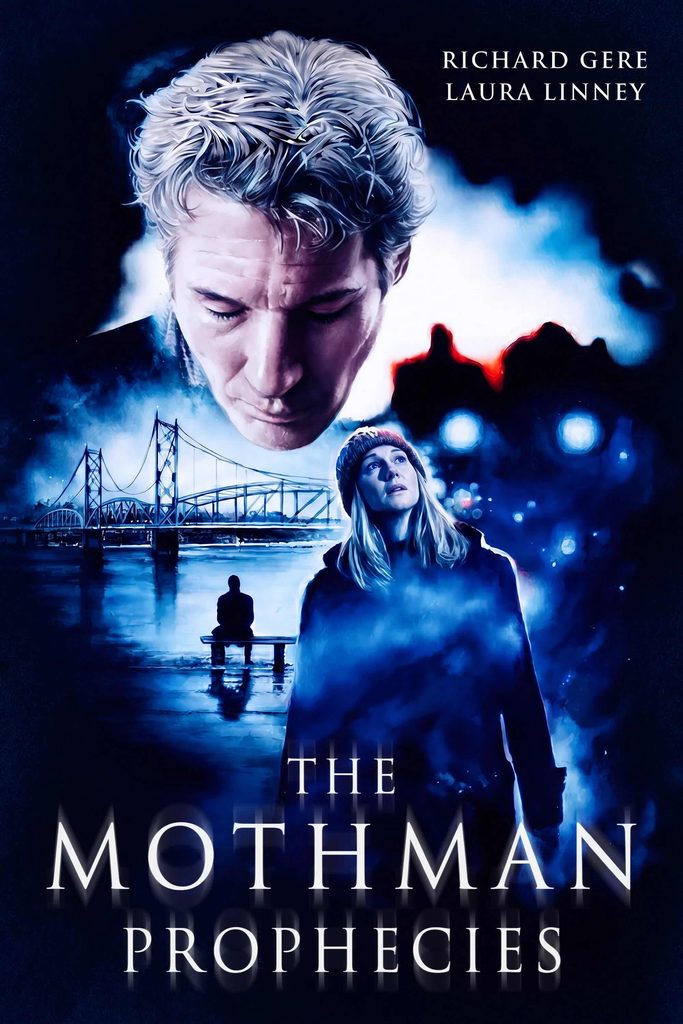
In a scene between the lead character John Klein (loosely based on Keel) and the fictional character Leek (representing the eccentric Keel), Leek remarks about the Ukrainians seeing a creature they called “Mothman” (in translation): “There were a hundred sightings in Chernobyl the year the nuclear plant went down.”
According to Fortean writer Loren Coleman, who was a consultant for the film [4], and the screenplay writer, Richard Hatem [5], this item, among others in the dialog, was made up for the movie. Leek also mentions a Galveston storm of 1969, which is also fiction. (Large storms occurred in 1900 and 1915 with zero mention of strange winged creatures.) This is creative license at work. However, many modern Mothman fans of today are too young to remember this movie well and/or may be completely unaware of the necessary context to judge these fictional add-ins to the story.
American Monsters
In 2005, the now defunct web site American Monsters ran a story called the “Black Bird of Chernobyl”. [6] It had no listed sources but repeated the 1986 story of responders seeing a “20-foot bird” in the smoking remains of the nuke plant. From the article:
“Researchers now believe that the accounts surrounding this creature are similar to what investigators now recognize to be an archetypal MOTHMAN event. Much like the Point Pleasant Mothman witnesses, these Chernobyl employees began to share unsettling and strangely similar experiences.“
Because this 2005 article is only available on the Wayback Machine, I haven’t been successful in seeing if there were any useful comments to this story at the time. It garnered the attention of Coleman who posted on his own site that it wasn’t a true story. [4]
On Episode #173 of The Cryptonauts podcast, Rob Morphy admits that he wrote the story on American Monsters after hearing the mention in the movie three years before. He also coined the name “Black Bird of Chernobyl” of the title. [7] He now realizes it was fiction that led to further misinformation. [8] Morphy also calls all the other far-flung appearances of a Mothman-like being at worldwide scenes of disasters “a big old raft of monkey turds”.
An archaeologist’s account
Even with the clear admissions that this was fake, the story was too good to squash. It kept growing via the internet where the tale was repeated with additional details that lended itself more like the Point Pleasant experience with Mothman as the harbinger of doom. The stories claimed the workers saw the creature for weeks before, that they were threatened by secret officials, and had bad dreams. The bird was seen after the incident as well. None of these can be substantiated. The story wraps itself up by noting that everyone who reported the Black Bird died.
The Black Bird legend was brought to the west by Australian archeologist Robert Maxwell who visited the exclusion zone. He noted to Australian/New Zealand news media [9] that there was no sound way to verify the story:
“The Black bird has also become one of those fairly safe legends where, if you try to look for proof, it might not be available because the workers are dead, or maybe the sightings were never officially recorded. “So, for people trying to check the voracity [sic] of these claims, of course, you’ve got to take them on face value because there’s not a lot of history or archaeology to go on.”
Maxwell himself couldn’t track the story farther back than 2005 so it clearly does not have a verified origin. Additionally, it’s unclear if Maxwell himself is a reliable source. He did not have had his archaeology doctoral degree at the time of his work at Chernobyl and has since stated he is “a direct descendant of Odin” and is “known for his unique and subversive art-making processes…” [10] I cannot find that his information regarding the local legends was peer reviewed or even published. [11] Therefore, it’s dubious all the way. Yet, it was highly influential because it got into the press, who didn’t check sources. Cryptid media also has a habit of not checking sources for reliability. Thus, we have stories that could be part-to-wholly fiction that get repeatedly passed on as facts.
Creepypasta
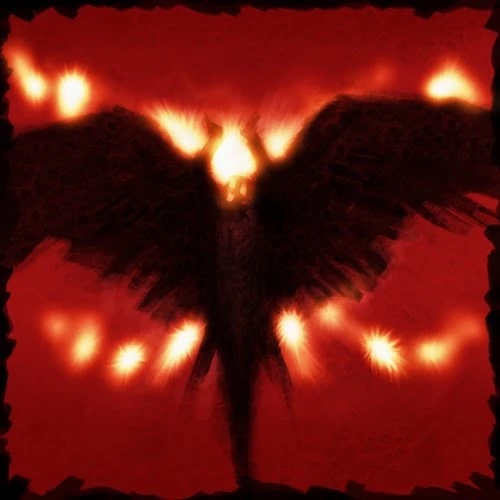
Several retellings of the Chernobyl events cite a nuclear physicist named Andrei Kharsukhov, associated with the “University of Buffalo”, who supposedly visited the site in 1997 and had a ghost experience. [12] This story is, again, without basis, but we can check the names. There was no Kharsukhov from (University at) Buffalo, with the name likely used for embellishment because it was similar to real Soviet nuclear physicist Andrei Sakharov.
Those who have researched the Chernobyl incident, and written about it, never met anyone who lived through the event mentioning the Black Bird tale, and it was not documented in any of the historical events. [13] Instead, there does seem to be established UFO tales but not a creature sighting.
Interest in the “Black Bird” and related tales really kicked up after HBO’s 2019 Chernobyl mini series. The articles about Maxwell’s stories were reposted and Google Trends shows peaks for searches on “black bird of Chernobyl” beginning in April 2019 with none prior to that back to 2004.
Now, the story is frequently linked to promoting “Mothman” as an international creature. But all signs logically point to the Black Bird of Chernobyl story being a creepypasta fictional tale passed along and embellished online.
In conclusion, we have the following summary:
- The origin story of seeing a creature at the Chernobyl site in 1986 has no evidence to support it.
- The transmission of the legend can be traced to Robert Maxwell, who reported to the press that the story existed in the area. He could not, however, find documentation of it farther back than 2005.
- In 2002, The Mothman Prophecies movie contained a mention to Chernobyl that was completely made up by the writers. They did not base it on known rumors.
- In 2005, the American Monsters website popularized the contemporary legend for cryptid fans, but the author admits it was fiction.
- The story bears all the hallmarks of an embellished contemporary legend, not a true story, popularized by renewed interest in Chernobyl and Mothman.
Therefore, there are no grounds to say that a Black Bird, or Mothman-like creature, appeared at Chernobyl or in other places worldwide associated with disasters. There is a common perception about the Point Pleasant version of Mothman, and that template has been used to justify claims from other sites where people say they saw a mysterious entity. From Chicago to Chernobyl, none of those sightings have been verified either. Mothman was a big story from late 1960s West Virginia but we can’t legitimately place the similar or same creature anywhere else.
Notes/References
1. Barker, G. (1970). The Silver Bridge.
2. Laycock, J. (2009). Mothman: Monster, Disaster, and Community. Fieldwork in Religion, 3(1), 70-86. https://doi.org/10.1558/firn.v3i1.70
3. Hill, S.A. (2006). The Tragedy of the Cryptids. https://moderncryptozoology.wordpress.com/2026/01/01/the-tragedy-of-the-cryptids/
4. Coleman, L. (2008). Galveston Mothman? http://www.cryptozoonews.com/galveston-mm/
5. Wells, J.D. (2026). Bringing Mothman to the masses. Carter County Times. https://cartercountytimes.com/features/art-e/bringing-mothman-to-the-masses/
6. The Black Bird of Chernobyl. (2005). AmericanMonsters.com https://web.archive.org/web/20061018185429/http://www.americanmonsters.com/content.php?section=articles&idarticle=219
7. The Cryptonauts Episode #173 at 01:25:45. https://sites.libsyn.com/112665/173-the-mothman-chronicles-part-6-the-aftermath
8. I inquired to Morphy where he might have gotten the story in 2005 but received no reply so far.
Update 3Oct2026: The reply from the Cryptonaut podcast was that the story was circulating on Fortean forums around 2002. Unfortunately, that doesn’t help with pinpointing its origin. The Creepypasta scene didn’t ramp up until more like 2007, but people have always made up or shared stories online.
9. Charleston, L.J. (2019). The frightening supernatural story of the Black bird of Chernobyl. New Zealand Herald. https://www.nzherald.co.nz/world/the-frightening-supernatural-story-of-the-black-bird-of-chernobyl/KH2SKIIUGWLXPJPMIKI2LXG2PI/
10. Robert Maxwell – Archaeology Facebook page https://www.facebook.com/maxwellarchaeology/
11. It’s not clear what any of this documentation from looking at his news media interviews and available online writing.
12. Example of a copy/paste story is on Vocal website – a site that produces unreliable storytelling meant to look factual. https://vocal.media/horror/the-ghosts-of-a-disaster
13. The Legend of the Black Bird of Chernobyl (2024). That Chernobyl Guy channel. https://www.youtube.com/watch?v=oJ4f-Df6vqY